Learning Outcomes:
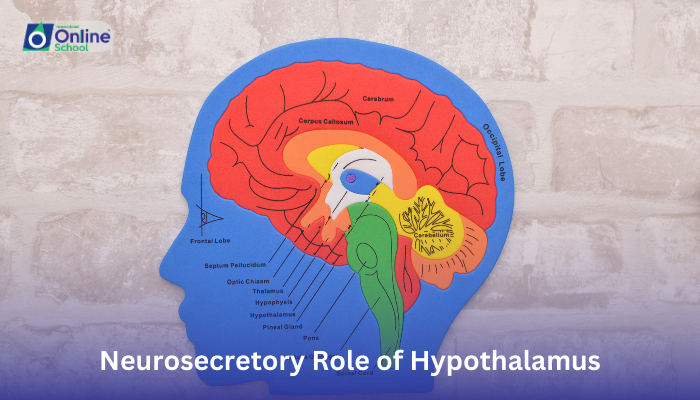
i. Explain the location and importance of the hypothalamus within the brain.
ii. Describe the neurosecretory role of the hypothalamus, focusing on its release of hormones that regulate the pituitary gland.
iii. Understand the diverse functions controlled by the hypothalamus through its influence on the pituitary gland, highlighting the interconnectedness of the endocrine system.
iv. Appreciate the hypothalamus as the central control center, orchestrating hormonal responses to various internal and external stimuli.
Introduction:
Imagine the human body as a bustling theater, where the endocrine system is the grand orchestra, and hormones are the actors on stage. But who pulls the strings from the shadows, directing the show and ensuring everything runs smoothly? In this lesson, we'll meet the mastermind behind the curtain – the hypothalamus, a tiny region in the brain with a mighty role in regulating the entire hormonal symphony.
i. The Master Conductor: Location and Importance of the Hypothalamus
Nestled deep within the brain, the hypothalamus acts like a conductor, coordinating the activities of the entire endocrine system. It's a small structure, but its influence is vast, influencing everything from growth and metabolism to emotions and sleep. Think of it as the central control panel, receiving signals from the body and the environment, then sending instructions to the pituitary gland, the orchestra's primary conductor.
ii. The Neurosecretory Powerhouse: Releasing Hormones to Control the Pituitary
The hypothalamus isn't just a conductor; it's also a magician, producing and releasing special hormones called releasing hormones and inhibiting hormones. These tiny messengers travel a short distance to the pituitary gland, like whispers in the dark, prompting it to release or inhibit other hormones into the bloodstream. This intricate communication ensures that the hormonal orchestra plays the right tune for each situation.
iii. The Symphony of Functions: How the Hypothalamus Orchestrates Diverse Processes
Through its influence on the pituitary gland, the hypothalamus controls a vast array of functions:
Growth and development: Stimulating the release of growth hormone for proper growth and development.
Metabolism and energy balance: Regulating appetite, thirst, and body temperature, ensuring efficient energy utilization.
Reproduction: Controlling the release of sex hormones like estrogen and testosterone, regulating fertility and sexual functions.
Stress response: Triggering the release of adrenaline and cortisol during stressful situations, preparing the body for fight-or-flight.
Sleep and wake cycles: Orchestrating the release of melatonin, a hormone that regulates sleep-wake patterns.
The hypothalamus, though small in size, is a mighty player in the endocrine system. Its neurosecretory role, regulating the pituitary gland, makes it the central control center, ensuring the hormonal orchestra plays the right tune for optimal health and well-being. Understanding this intricate network of communication is crucial for appreciating the delicate balance of our internal environment and recognizing the potential consequences when this balance is disrupted. So, the next time you feel a surge of energy or a wave of calmness, remember the silent conductor behind the curtain, the hypothalamus, whispering its instructions and ensuring the grand performance of life continues smoothly.
